Welcome to the CPAA Saskatchewan Branch’s Website.
Welcome to the Saskatchewan branch of the Canadian Postmasters and Assistants Association (CPAA).
On our website, you’ll find valuable resources including information on our upcoming convention, access to important forms, details about membership, and the full Collective Agreement. Subscribe below to stay up-to-date on key items, facts about our union, and updates to the website.
Feb 14, 2026- Article by our President Dwayne Jones:
The Saskatoon StarPhoenix and the Cape Breton Post published an op-ed by CPAA National President.
Opinion: Rural post offices provide vital Canadian service
The corporation’s own costing reports show that rural delivery operated by CPAA members is the lowest-cost delivery model in the network, averaging approximately $61 per address per year.
Author of the article:
By Viewpoints
Published Feb 14, 2026
Last updated 6 days ago
3 minute read
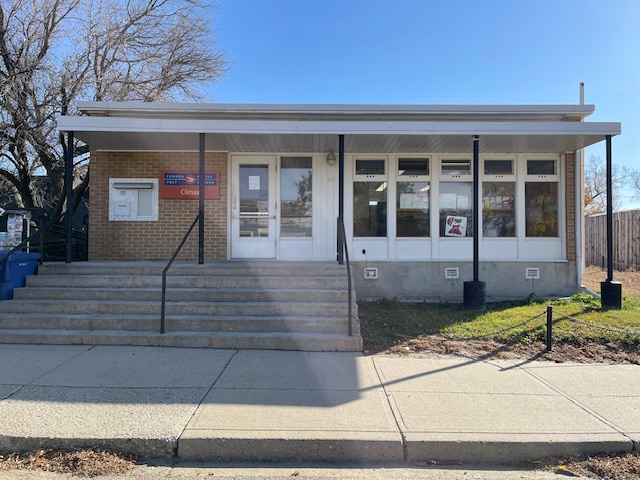
In the coming weeks, the federal government is expected to respond to Canada Post’s proposed cost-savings plan — a decision that will help determine the future of postal services across the country. For those living in rural, remote, and northern communities, without a multitude of reliable delivery options at their disposal, what comes next will shape daily life in very real ways.
The Canadian Postmasters and Assistants Association represents more than 8,500 Canada Post employees who operate rural, remote, and northern post offices. Many are the only federal employees in their communities, often running offices from their homes or small rented spaces at their own expense. Rural post offices do far more than deliver mail. They enable farmers, local producers, Indigenous creators, and small business owners to send and receive essential goods and keep their operations viable. In many communities, if Canada Post does not deliver it, it simply does not arrive.
For our members, the implications of closures or service reductions are deeply personal. Over 92 per cent of CPAA members are women, and their work provides stable employment in places where alternatives are limited. When hours are cut or offices close, it is not just a service that disappears, but a livelihood and a critical anchor in the local economy.
We have been actively engaging with the federal government to highlight what is at stake if proper guardrails are not in place, including the need for mandatory community consultation before any closures or service reductions are considered. While governments often favour formulaic approaches in legislation, one-size-fits-all assessments based solely on population or distance would not capture the realities of many rural communities. Regional nuances, such as seasonal roads or service points accessible only by ferry, would be overlooked by a simple distance calculation. Without consultation, decisions about closures or service reductions risk unintentionally cutting off access to services that communities depend on for health, economic activity, and connection to the rest of the country.
Canada Post’s financial pressures are real, and modernization is necessary. Yet, the corporation’s own costing reports show that rural delivery operated by CPAA members is the lowest-cost delivery model in the network, averaging approximately $61 per address per year. Reducing these services would do little to improve finances, while significantly undermining access for residents who depend on them.
There is also an opportunity to strengthen rural services. Pilot projects in Ontario and Saskatchewan have shown how post offices can function as local service hubs, providing access to government programs, financial services, and other community-specific supports. Rural post offices are not standing in the way of modernization. They are already helping to deliver it.
There is reason to be cautiously optimistic. In our discussions with the federal government, we have been assured that rural postal services will be protected and, where possible, strengthened. Canada Post has likewise acknowledged the importance of maintaining service to rural, remote, and Indigenous communities.
In many small towns and remote communities, the post office represents the last remaining federal presence. At a time when many Canadians feel disconnected from national institutions, this presence carries weight. It signals inclusion and continuity, particularly in places that already feel distant from decision-making center’s.
Beyond symbolism, Canada Post has a legal obligation under the Canada Post Corporation Act and its universal service mandate to provide postal services to all Canadians. That obligation includes rural, remote, and northern communities and cannot be compromised in the name of cost-cutting.
For residents of rural Canada, access to reliable postal services is not about convenience. It is about staying connected and participating fully in the country they call home. The government has the opportunity to modernize postal services in a way that strengthens, rather than diminishes, the connection between rural Canadians and the institutions that serve them.
The signals are encouraging, but the details will ultimately tell the story. Rural Canada will be watching.

Newsletter
To find our latest newsletter go to: Newsletters – CPAA Saskatchewan Branch
If you are a member but are not receiving them in the mail, please contact one of our board members to make sure your address is correct.

To see Canada Posts Current Job Opportunities as a member, follow this link. You will be required to sign into intrapost as this is for members only.